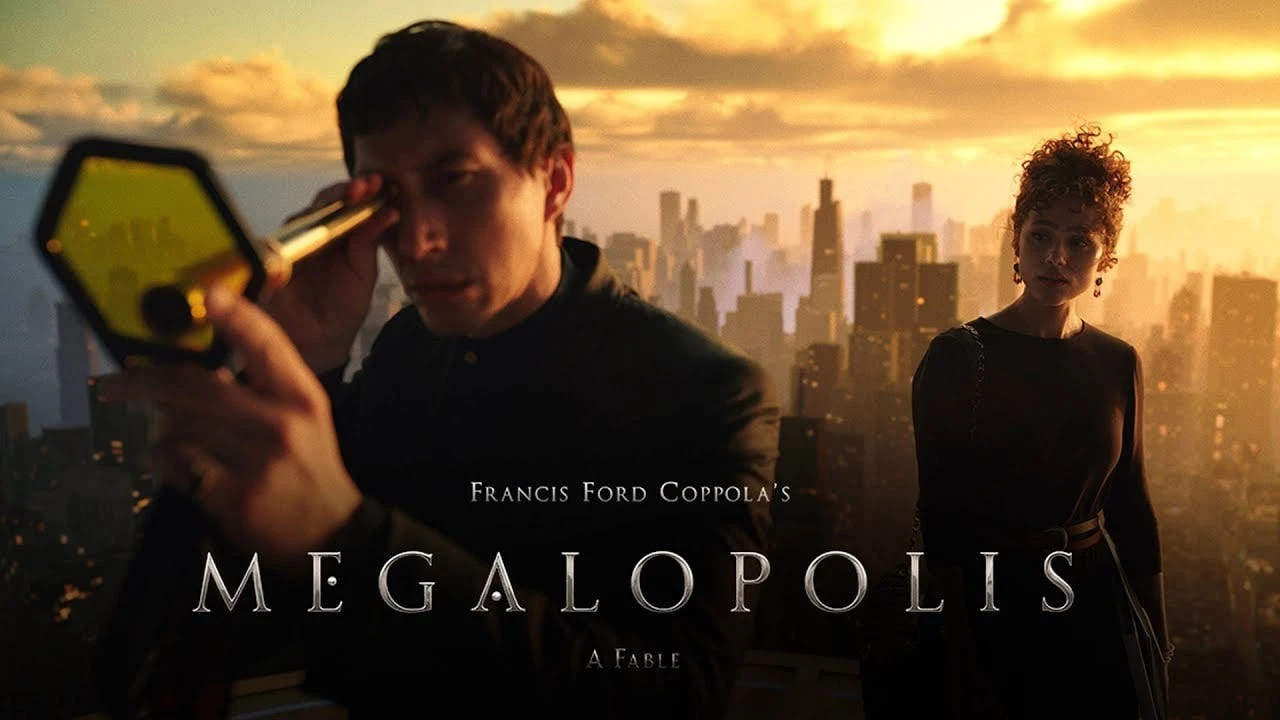
Maestro Coppola spent decades dreaming of this film—when he couldn’t find funding, he saved up his own money and made it happen. That kind of dedication commands respect. But what did we actually get in the end?
I liked the movie. From the very first frames, I was hooked. But even with my leniency toward the project, I physically needed a break by the halfway mark. When even a friendly viewer gets exhausted, that’s a problem.
The film's style fluctuates—sometimes old-fashioned, sometimes retro-futuristic, sometimes ripped straight from today’s headlines. The result? A work that feels out of time, which gives it a certain grandeur but might also prevent it from becoming a cult classic down the line.
Megalopolis is a full-blown neurodivergent film. A neurotypical viewer might struggle to grasp what the fuck is happening right in front of them. If we’re to use a more conventional term, it’s arthouse. But not just any arthouse—this is the most expensive arthouse I’ve ever seen. Coppola poured $120 million of his own money into this beast.
That budget lands us a stacked cast—Adam Driver, Aubrey Plaza, Nathalie Emmanuel, Laurence Fishburne, Shia LaBeouf, Dustin Hoffman, and more. The visuals are stunning in the best way: CGI that’s deliberately not photorealistic but also not grotesquely plastic. The sound, the color grading—fantastic. Huge props to the costume and prop teams. There are chariot races, for fuck’s sake. It’s all cohesive, all serving the vision.
But does the vision itself work? That’s the real question. Despite tackling major themes—clear references to the Capitol riot, a critique of populist-fascist rhetoric, the importance of civil discourse, processing grief, and finding love—I walked away unsure of what Megalopolis actually left me with. And within days, I’d pretty much forgotten it entirely.