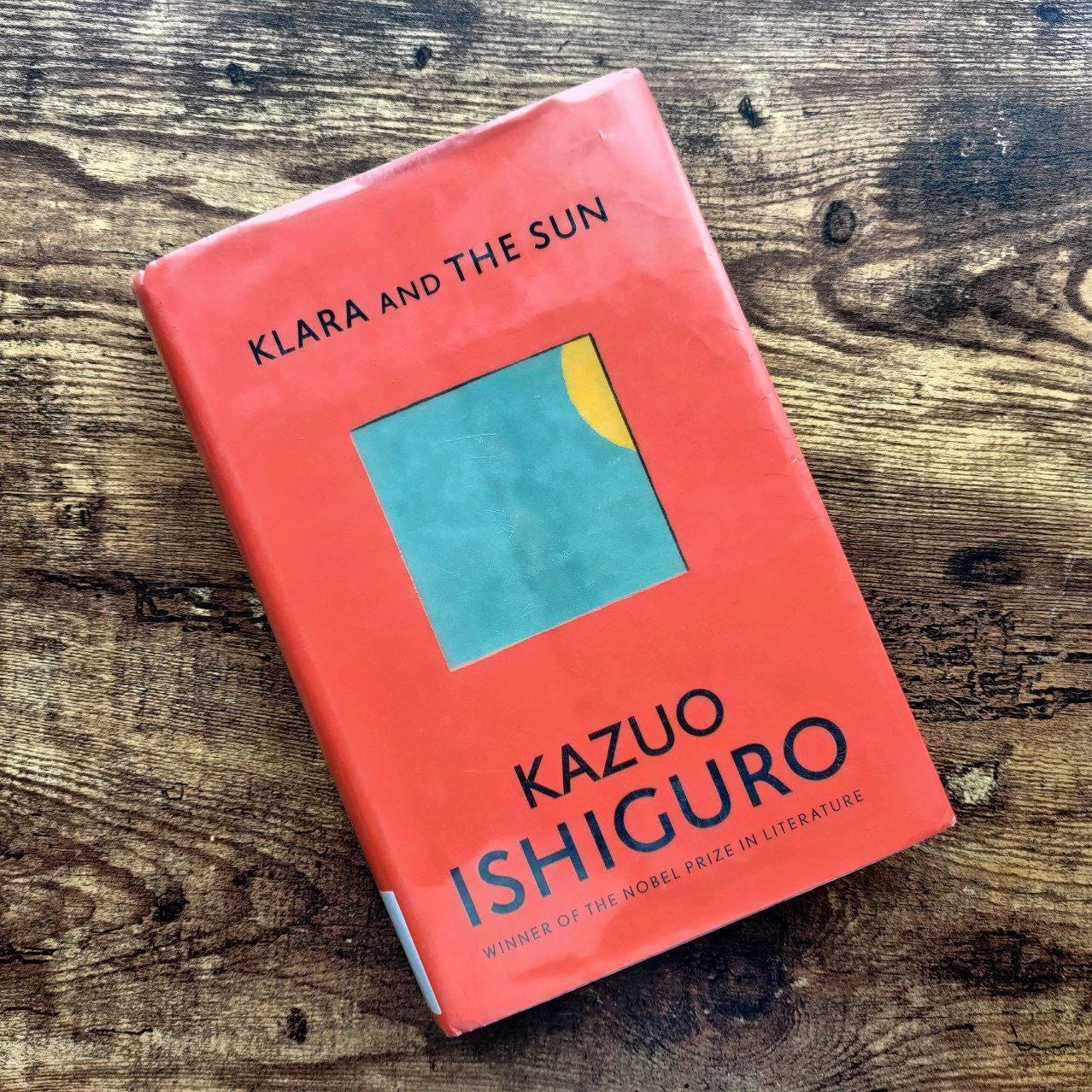
I only recently discovered Ishiguro. What piqued my interest was that he's written across multiple genres — from historical novels to sci-fi. So I decided to kick off my acquaintance with him by starting with one of his sci-fi works.
Near future. The world looks a lot like 2025. Some breakthroughs in genetics here and there, but the big difference? Androids are now everyday consumer products you can browse in showrooms and purchase like a phone. The most popular models are called AFs — Artificial Friends — companions for kids and teens. Klara is one such AF, and we see the whole story unfold through her perspective.
The book doesn’t exactly break new ground in sci-fi: here, as often, sci-fi serves mainly to highlight the timeless fact that humans are still bastards. Ishiguro shines a light on society’s incurable flaws — things progress never seems to fix.
We’ve seen this theme a hundred times before — but the way he writes it! The prose is restrained, surgically precise, at times almost detached — perfectly putting you inside an android’s mind. And that clean, minimalistic style reads like butter: no rough edges to trip over. Simplicity like this takes enormous craftsmanship, and from this first book alone, I instantly believed Ishiguro to be every bit as much a master of language as Hemingway or Dovlatov.
It’s hard to talk about the plot without spoilers, but I’ll try. At the core is the relationship between Klara and a girl named Josie. Josie’s life isn’t exactly sunshine and rainbows, but she deeply loves Klara. The robot, meanwhile — by either design flaw or accident — displays something like human curiosity, beyond her programmed behaviors. Klara charges herself via sunlight, but for her, the Sun becomes something more than just an energy source — it’s romanticized, spiritualized, elevated. That’s why the book is called Klara and the Sun, not Klara and Josie, for example.
I thoroughly enjoyed it, though I was a bit thrown by the ending. But after carrying the aftertaste around for a week or two, I realized: you couldn’t have written a better ending. I won’t throw around words like “genius,” but I’ll say: exquisite.
P.S. Apparently, Taika Waititi is already deep into filming the adaptation. Can’t wait for this one.